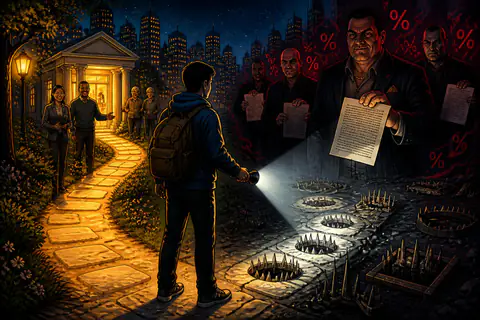
Building Credit From Scratch: A Beginner’s Guide to Borrowing
Starting without any credit history can feel like trying to open a locked door without a key. Lenders, landlords, and even some employers look at your credit to decide if they can trust you. The good news is that building credit from scratch is absolutely possible when you follow clear, smart steps.
This guide will help you understand what credit is, how it works, and how to use borrowing as a tool—not a trap—to build a strong financial foundation.
What Credit Really Is and Why It Matters
Credit is simply your financial reputation on paper. It shows how likely you are to repay money you borrow. When you build credit, you are building proof that you can be trusted with financial responsibilities.
Most lenders and financial institutions use a credit score, often ranging from 300 to 850, to quickly judge that trust. A higher score usually means lower interest rates, easier approvals, and better terms. Even without wanting loans right now, a good credit profile protects your future options.
Good credit can help you:
- Get approved for an apartment rental or mortgage
- Qualify for lower interest on car loans
- Save money on deposits for utilities or phones
- Access better credit card rewards and terms
When you have no credit, lenders are not sure what to expect. Your first goal is to create a history that proves you are reliable and consistent.
How Credit Scores Are Built
Understanding what shapes your score helps you focus your efforts. While exact formulas vary, most credit scores are influenced by five main factors:
| Factor | Approximate Impact | What It Means |
|---|---|---|
| Payment history | ~35% | Whether you pay bills on time |
| Amounts owed | ~30% | How much of your available credit you use |
| Length of history | ~15% | How long you have had accounts |
| New credit | ~10% | Recent applications and new accounts |
| Credit mix | ~10% | Variety of credit types you use |
If you are just starting, your focus should be on perfect on-time payments and keeping your balances low. These two actions alone can put you on a strong path.
First Steps When You Have No Credit History
When you have no credit, you usually start with products designed for beginners. These are not second-class options; they are stepping stones toward stronger financial independence.
Here are several effective starting points. You do not need to use all of them. Choose what fits your situation and comfort level.
Option 1: Secured Credit Cards
A secured credit card is one of the most common tools for building credit from scratch. With a secured card, you provide a cash deposit (for example, $200 or $500), and that deposit usually becomes your credit limit. The bank holds this money as security.
You use the card like any other credit card: make small purchases, then repay them. If you pay your bill on time every month, your responsible behavior is reported to the credit bureaus and your score begins to grow.
To use a secured card wisely:
- Charge only small, predictable expenses like gas or a streaming service
- Keep your balance under about 30% of the limit
- Pay the full balance every month, not just the minimum
This keeps your costs low and sends a clear message: you are a disciplined, low-risk borrower.
Option 2: Becoming an Authorized User
If a family member or trusted friend has strong credit and healthy habits, they may add you as an authorized user on their credit card. Their account history can appear on your credit report, helping you build credit even if you do not use the card directly.
This strategy works best when:
The primary cardholder has:
- Years of on-time payments
- Low balances compared to their limit
- No history of late payments or defaults
Have an honest conversation beforehand. Set clear expectations, and if possible, agree that you will not use the card or that it will be kept securely. The purpose is to borrow their strong history, not their available credit.
Option 3: Credit Builder Loans
A credit builder loan is specifically designed for people with little or no credit. Instead of receiving the money upfront, the lender places the loan amount into a locked savings account.
You make monthly payments toward that amount, just like a normal loan. Those payments are reported to the credit bureaus. Once you have fully repaid the loan, the money is released to you.
This is a powerful tool because it helps you build savings and credit at the same time. You are proving you can handle a fixed monthly payment, and at the end you have a small sum of money available for emergencies or goals.
Borrowing Wisely: Habits That Build, Not Break
Getting approved for credit is only the first step. The real progress happens in how you use it. Borrowing should support your goals, not create constant stress and worry.
Follow these core habits from the very beginning:
1. Always pay on time. Even a single late payment can damage a young credit profile. Set automatic payments for at least the minimum, and use reminders for the full amount.
2. Keep utilization low. Utilization is the percentage of your credit limit that you are using. For example, a $300 balance on a $1,000 limit is 30% utilization. Aim to stay under 30%, and under 10% is even better.
3. Borrow with a purpose. Ask yourself before using credit: Does this purchase help me or put me at risk? Using credit for necessities you can repay or for building history is helpful. Using it for constant impulse buying can quickly become a problem.
Monitoring Your Progress and Staying Motivated
Building credit is not instant; it is a gradual process. But small, consistent actions will add up. Monitoring your credit helps you stay focused and catch problems early.
You can:
- Check your credit report regularly to ensure information is accurate
- Use free tools that estimate your score over time
- Review how changes in your balances or payments affect your score
Seeing improvement, even slow improvement, can be motivating. Each month of timely payments is one more brick in your long-term financial foundation.
Avoiding Common Pitfalls for New Borrowers
When you first get access to credit, it can feel exciting and empowering. But some missteps can slow your progress or create unnecessary stress. Protect yourself by watching out for these pitfalls:
Taking on too many accounts. Applying for several cards or loans in a short time can hurt your score and make you feel overwhelmed. Start with one or two well-chosen accounts and manage them well.
Carrying high-interest balances. Interest charges add up quickly, especially on credit cards. If you can pay in full each month, you avoid paying extra money just for the privilege of borrowing.
Ignoring bills that are not traditional credit. While some bills may not build credit when paid on time, they can hurt you if unpaid and sent to collections. Treat all your financial obligations as part of your overall reputation.
Building Credit with Confidence and Intention
Starting from zero is not a disadvantage; it is a clean slate. You have the chance to design your credit story with intention. With every on-time payment and responsible decision, you are proving something important: you can handle opportunity wisely.
Think of credit as a tool, not a measure of your worth. Used thoughtfully, it can open doors—better housing, lower costs, and more choices. Your goal is not just a higher number; your goal is stable, stress-free finances that support the life you want.
Begin with one step: choose a starter product, such as a secured card or credit builder loan, set up automatic payments, and commit to spending only what you can repay. Over time, those simple actions will turn into a powerful track record that follows you for years, supporting your goals instead of standing in your way.
With patience, discipline, and clear habits, you can build credit from scratch and create a financial future you control—rather than one that controls you.