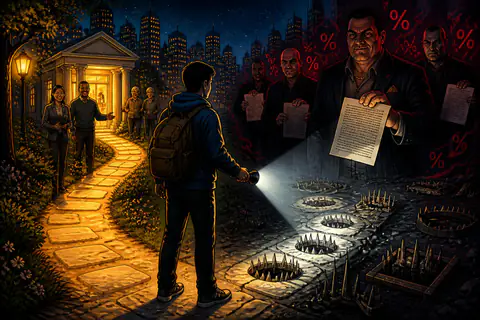

The Hidden Costs of ‘Buy Now, Pay Later’ Financing
Everywhere you shop online, one message keeps popping up: “Buy now, pay later — interest free!” It sounds harmless, even smart. Why pay everything today when you can split it into easy installments?
But beneath the friendly buttons and smooth checkout screens, BNPL financing carries risks that can quietly damage your budget, your peace of mind, and even your long-term financial health. Understanding those hidden costs is the first step to using these tools wisely — or avoiding them altogether.
How ‘Buy Now, Pay Later’ Really Works
BNPL services let you split a purchase into several payments over a short period, often four installments over six weeks. The pitch is simple: no interest, no hard credit check, just easy payments.
Behind the scenes, though, the business model is more complex. The retailer gets paid up front by the BNPL company, minus a fee. Then the BNPL provider collects your installment payments and may charge late fees if you miss them. Some plans extend over longer terms, with interest added or promoted “0% interest” that turns into high rates if you slip up.
On the surface, it feels like a friend helping you out. In reality, it’s a financial product designed to encourage more spending today in exchange for payments tomorrow.
The Psychological Trap: Small Payments, Big Commitments
One of the biggest hidden costs of BNPL isn’t in money — it’s in mindset. Breaking a $200 item into four $50 payments makes it feel cheaper, but you are still paying $200. The smaller payment just tricks your brain.
Instead of asking, “Can I afford $200 today?” you start asking, “Can I afford $50 today?” That shift makes it easier to say yes, again and again. Before you know it, you have multiple BNPL plans active at once, each with its own due dates.
This leads to a dangerous pattern: you confuse affordability with cash flow. Just because you can manage the first small payment doesn’t mean your future self can easily handle all the remaining ones — especially if an emergency happens or your income drops.
The Financial Risks You Don’t See at Checkout
BNPL is often advertised as “no interest” and “safe,” but there are real financial risks hiding in the fine print and in your own behavior. Here are some of the most important ones.
- Late fees and penalty charges: Miss a payment, and you may be hit with late fees. One small slip can turn an “interest-free” purchase into something much more expensive.
- Multiple overlapping plans: Because BNPL is so frictionless, people often have several active plans at once. The total monthly commitment can be much higher than it looks when you agree to each individual purchase.
- Encouragement of impulse buying: When the full cost is pushed into the future, it becomes easier to buy things you don’t truly need.
- Refund and return complications: If you return an item, refunds through BNPL can be slow or confusing, while payments may keep coming out of your account until everything is processed.
These issues are not just hypothetical. Many users discover them the hard way: when their accounts are overdrawn, their next paycheck is already spoken for, or their stress levels spike every time bills are due.
BNPL and Your Credit: Invisible Damage
Another hidden cost lies in your credit profile. Some BNPL services don’t report your on-time payments to major credit bureaus, which means you don’t build positive credit history even if you’re responsible.
But if you miss payments or default, some providers may report the negative information, send your debt to collections, or both. That means you could damage your credit score without having gained any benefit from paying on time in the past.
In some countries, regulators are still catching up with how BNPL should appear on credit reports. Until the rules become clearer, there’s a risk that your future mortgage, car loan, or credit card application could be affected by today’s “small” installment purchases.
The Emotional Toll: Stress, Shame, and Confusion
Financial stress isn’t just about numbers. When BNPL payments start to pile up, many people feel overwhelmed, embarrassed, or confused. The apps are slick and cheerful when you sign up, but the reality of constantly tracking payment dates is different.
It’s common to feel:
- Worried about whether you’ll have enough money left after payments
- Guilty for past impulse buys that now feel like burdens
- Confused by different schedules, providers, and emails
Over time, that emotional weight can be a serious hidden cost. It steals your sense of control, and it can even affect your relationships if money tension begins to spill into your home life.
BNPL vs. Other Ways to Pay
To see the real cost of BNPL, it helps to compare it with other payment methods. There is no one-size-fits-all answer, but understanding the trade-offs empowers you to choose more wisely.
| Payment Method | Main Advantages | Main Risks or Costs |
|---|---|---|
| Debit / Cash | Simple, no interest, spend only what you have | Limited protection, can drain emergency funds |
| Credit Card (paid in full) | Buyer protection, rewards, credit building | Temptation to carry balance if not careful |
| Credit Card (carrying balance) | Flexibility, longer repayment periods | High interest, growing long-term debt |
| BNPL (short-term, “no interest”) | Easy approval, smaller installments | Late fees, multiple plans, impulse spending |
Looking at the bigger picture, BNPL often encourages you to say yes to purchases that a cash-only or “pay in full” system might force you to question. The real price is not just the item itself, but its impact on your overall financial plan.
Safe Rules for Using BNPL — If You Choose To
BNPL is not automatically bad, but it is powerful — and anything powerful needs rules. If you decide to use it, you can protect yourself by setting strict boundaries and sticking to them.
Consider these guidelines:
- Use BNPL only for planned purchases, not emotional or impulse buys.
- Limit the number of active plans you have at any time — for example, no more than one or two.
- Never exceed a set monthly cap (such as 5–10% of your income) on all BNPL payments combined.
- Turn on automatic payments from a stable account and track the due dates in your calendar.
These simple rules help shift BNPL from a trap into a tool you manage on your terms.
Practical Steps to Break Free from BNPL Dependence
If you already feel stuck with too many BNPL payments, you’re not alone — and you’re not powerless. You can regain control with a few clear, practical steps.
1. List every active BNPL plan. Write down the provider, remaining balance, payment amount, and final due date for each one. Seeing everything in one place replaces vague anxiety with clarity.
2. Create a simple payoff strategy. Prioritize the smallest balances or the ones with the highest fees. When you finish paying one plan, roll that freed-up money into the next one. This snowball effect helps you rebuild momentum and confidence.
3. Pause new BNPL purchases. Make a promise to yourself: no new BNPL until your current plans are fully paid. This gives your budget breathing space and stops the cycle from continuing.
4. Build a small emergency buffer. Even a modest cushion — for example, one or two weeks of expenses — can protect you from missing payments when unexpected costs pop up.
5. Reflect on your triggers. Ask yourself when you’re most tempted to use BNPL: late at night, when you’re stressed, when you see influencer posts. Recognizing these patterns helps you create healthier responses, like waiting 24 hours before buying anything non-essential.
Choosing Long-Term Freedom Over Short-Term Convenience
BNPL is designed to be easy, fast, and frictionless — and that’s exactly what makes it dangerous. It smooths over the natural hesitation that usually protects you from overspending. The hidden costs are not only in money, but in lost control and constant worry.
When you slow down and ask, “How does this affect my future self?” you begin to step out of the trap. You move from quick comfort to long-term strength. Paying in full, delaying a purchase, or saving up for something you really want may not feel as exciting in the moment, but it builds something much more valuable: confidence, independence, and real financial peace.
Your power doesn’t lie in saying yes more easily. It lies in choosing carefully, spending intentionally, and protecting your future from commitments that don’t serve you. BNPL can be part of your financial life — or you can leave it behind — but either way, you deserve to understand its true cost and make decisions that keep you firmly in control.